
Aiper Scuba X1 vs. Beatbot AquaSense 2: Ultimate Pool Robot Comparison 2026
Executive Summary
Two robotic pool cleaners have dominated the premium conversation heading into 2026, and the debate is fiercer than ever. The Beatbot AquaSense 2 redefines what “intelligent” means in the pool-cleaning category — it practically takes care of itself, floating to the surface when done so you never have to fish it out with a hook. The Aiper Scuba X1, on the other hand, hits back hard on pure cleaning performance: best-in-class suction, 3-micron ultra-fine filtration, and the kind of scrubbing power that pulls fine silt, NYC pollen, and heavy sediment out of a gunite basin as if it never existed.
Best for Deep Cleaning Power — Aiper Scuba X1:
The suction and filtration king. Industry-leading 3-micron filtration captures what competitors miss. Purpose-built for gunite and concrete pools plagued by heavy sediment, algae, and fine silt.
Quick Recommendation by Pool Type: If you own a vinyl-lined pool with recurring leaf and surface debris issues, the Beatbot AquaSense 2’s 5-in-1 cleaning and floating retrieval make it the obvious choice. If your pool is gunite or concrete and battles fine silt, algae staining, or heavy sediment — especially after a harsh NYC winter — the Aiper Scuba X1’s raw suction and micro-filtration will outperform everything else in its class.
Comparison at a Glance


Design & Navigation: AI vs. Logic
Beatbot AquaSense 2: The Neural Pool Mapper
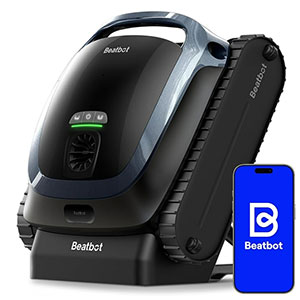
The Beatbot AquaSense 2 is built around an engineering philosophy that most pool robot makers haven’t even considered yet: treat the pool as a 3D environment, not a flat surface to be swept in lanes. At the heart of this is a proprietary Neural Processing Unit (NPU) paired with a 20-sensor array — a combination of ultrasonic proximity sensors, optical depth detectors, and inertial measurement units — that allows the robot to construct a real-time 3D map of your pool basin.
What this means practically: the AquaSense 2 doesn’t just avoid obstacles — it anticipates them. It models the pool’s irregular edges, adjusts coverage density in corners where debris accumulates, and recalibrates its path mid-cycle if it detects it’s missing a section. For pools with vanishing edges, sun shelves, or irregular freeform shapes — increasingly popular in Westchester and NJ new builds — this is genuinely transformative. After three or four cleaning cycles, the NPU has developed a proprietary route for your specific pool that eliminates redundant passes, reducing cleaning time by up to 20% while maintaining full coverage.
Aiper Scuba X1: WavePath™ 3.0 — Precision Without AI
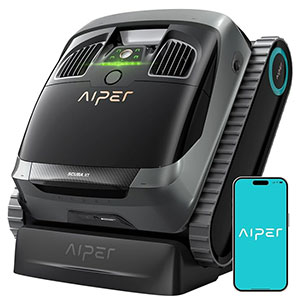
The Aiper Scuba X1 takes a different, arguably more reliable approach: WavePath™ 3.0 Navigation, an advanced algorithmic system that uses gyroscopic sensors and real-time path correction to execute systematic, overlapping cleaning passes. Unlike AI-driven systems, WavePath™ doesn’t need multiple cycles to learn — it performs at full efficiency from the very first run.
WavePath™ 3.0 excels in rectangular and L-shaped pools, which make up the majority of older pools across NYC’s five boroughs, Long Island, and suburban New Jersey.
Its systematic grid-pattern approach ensures zero missed spots, and its wall-climbing protocol is among the most aggressive in the industry — reaching and scrubbing the full waterline on every pass without needing manual intervention.
The NYC Edge: First Spring Clean-Up
New York metro pool owners face a challenge most buyers’ guides ignore entirely: the post-winter first clean-up. After four to six months under a pool cover, basins accumulate a dense layer of decomposed organic silt, tannins from leaves, algae blooms, and mineral scale. The Aiper Scuba X1’s raw suction advantage (4,500 GPH vs. 4,000 GPH) combined with its 3-micron filtration makes it the significantly stronger performer for this annual heavy-lifting cycle. The Beatbot AquaSense 2, while smarter in navigation, will require multiple passes and potentially a manual vacuuming assist when facing truly severe post-winter fouling.
Cleaning Performance: Beyond the Surface
Scrubbing Power: Brushes That Mean Business
The Aiper Scuba X1 deploys a dual counter-rotating brush system running at high RPM — engineered specifically to break up biofilm, algae adhesion, and mineral scale on rough gunite and pebble surfaces. The brushes are designed with a staggered bristle pattern that simultaneously agitates debris loose and sweeps it toward the intake, eliminating the “scatter and miss” problem common in single-brush designs.
The Beatbot AquaSense 2 uses a softer multi-surface roller brush configuration optimized for versatility across vinyl and fiberglass surfaces. It’s gentler — intentionally so — which protects delicate pool liners but means it won’t dislodge stubborn algae staining the way the Scuba X1 can. For tile and pebble pools with visible algae lines at the waterline, the Aiper wins this round convincingly.
Filtration Excellence
This is where the Aiper Scuba X1 genuinely separates itself from every competitor in the 2026 market. Its 3-micron ultra-fine filtration captures particles essentially invisible to the naked eye — including fine pollen (a massive issue for NYC pools from April through July), fungal spores, and fine mineral particles that cloud water and stress pool chemistry. To put this in perspective, a human hair is approximately 70 microns in diameter. The Scuba X1 is catching debris 23 times finer than that.
The Beatbot AquaSense 2’s strength lies in its 5-in-1 cleaning capability — the only robot in this comparison that actively skims the water surface. It deploys a dedicated surface collection skimmer that captures floating debris (leaves, insects, sunscreen film, pollen mats) before it has a chance to waterlog and sink. For pools surrounded by oak trees or in areas with high airborne debris, the AquaSense 2’s surface cleaning alone can justify its premium price.
Wall & Waterline Performance
Both robots climb walls, but not equally. The Beatbot AquaSense 2’s NPU-guided approach allows it to identify wall transitions in real-time and adjust motor torque to maintain suction contact. The Aiper Scuba X1, however, applies more aggressive mechanical scrubbing force at the waterline — critical for pools with hard water mineral rings (calcium deposits) that are endemic to the NYC metro area’s notoriously mineral-heavy municipal water supply.
User Experience: The Pain of Retrieval
The Beatbot Advantage: Surface Parking
Traditional robotic pool cleaners sink to the bottom when their cycle ends. You drag them out with a hook, haul them over the pool wall dripping wet, and then deal with 20-plus pounds of water-logged robot — often solo, often in direct sun, often in flip-flops. It’s one of the most friction-heavy parts of pool ownership.
The Beatbot AquaSense 2 eliminates this entirely with Surface Parking technology. When the cleaning cycle completes, the robot buoyantly rises to the surface and parks itself near the pool’s edge, floating stably until you’re ready to retrieve it. It weighs approximately 19 lbs dry — and because it’s floating, there’s no dead-weight drag. You lift it out as if it were a beach toy. For elderly pool owners, anyone with back issues, or households where pool maintenance falls to children or guests, this feature alone is worth significant consideration.
The Aiper Reality: 26 Pounds of Wet Robot
The Aiper Scuba X1 is a heavier, denser machine — approximately 26 lbs — and it does not have Surface Parking. When the cycle ends, it rests on the pool floor. Retrieval requires either a dedicated caddy with a retrieval cord (included) or a hook-and-lift approach. In practice, most Scuba X1 owners schedule cleans for early morning so the robot is ready to retrieve when they head out — a minor behavioral adjustment but a real one.
App Integration: Wi-Fi vs. Bluetooth
The Beatbot AquaSense 2’s HydroComm Wi-Fi connectivity is a genuine differentiator. Because it connects over Wi-Fi (not just Bluetooth), you can start, stop, schedule, and monitor cleaning cycles from anywhere — from your office in Midtown, from the Hamptons house, or during your morning commute. Real-time cleaning maps, filter alerts, and cycle history are all accessible through the Beatbot app from any distance.
The Aiper Scuba X1’s Bluetooth app is functional and well-designed but requires you to be within approximately 30 feet of the robot to connect. Scheduling, cycle selection, and filter notifications all work — but remote monitoring from off-site is not possible without a third-party smart home bridge.
Maintenance & Durability
Filter Access: How Easy Is the Rinse?
The Aiper Scuba X1 uses a top-loading filter canister — lift the handle, pop the top, remove the cartridge in one motion. Rinsing is fast and intuitive; the cartridge snaps back in with a satisfying click. The 3-micron filters need cleaning after every 2–3 cycles for light use, but the access design makes this a 90-second task rather than a chore.
The Beatbot AquaSense 2 uses a side-access filter bay with separate compartments for the surface debris basket and the fine filter cartridge. The dual-compartment design is logically organized, but cleaning both sections takes approximately twice as long as cleaning the Scuba X1’s single cartridge. That said, Beatbot’s filter material requires less frequent replacement — its 5-in-1 system pre-filters surface debris before it reaches the fine filter, extending cartridge life noticeably.
Longevity: Battery Cycles and Motor Warranty
Both robots use lithium-ion battery packs with anticipated life spans of 500–700 full charge cycles before noticeable capacity degradation — roughly 3–5 seasons of regular use. Aiper offers a 2-year limited warranty on the motor and drive system. Beatbot backs the AquaSense 2 with a 2-year comprehensive warranty that covers the NPU and sensor array in addition to the motor — a meaningful advantage given the complexity of its electronics.
Regional Support: Tri-State Area
Beatbot has service partnerships with several premium pool equipment dealers in Manhattan, Brooklyn, and Westchester County. Aiper has a growing network of certified service centers in Nassau County, Bergen County (NJ), and Fairfield County (CT). For warranty claims, both offer mail-in service with pre-paid return labels — typically a 7–10 business day turnaround.
Price vs. Value: Is the Premium Justified?
Beatbot AquaSense 2 — MSRP ~$1,899
- Replacement fine filter cartridges: ~$28/pair
- Surface debris basket replacement: ~$18
- Estimated annual filter cost (regular use): $80–$120
- Power consumption per cycle: ~220Wh (~$0.04/cycle)
Aiper Scuba X1 — MSRP ~$1,499
- Replacement 3-micron cartridges: ~$35/pair
- Brush replacement kit: ~$42
- Estimated annual filter cost (regular use): $90–$150
- Power consumption per cycle: ~200Wh (~$0.04/cycle)
The $400 upfront difference between these two robots is the central purchasing question. The Beatbot AquaSense 2 commands its premium through technology sophistication — the NPU, the sensor array, HydroComm Wi-Fi, and Surface Parking are all premium features that cost money to engineer. If any of those features directly solve a pain point in your life, the premium is clearly justified.
The Aiper Scuba X1 is arguably the better value per cleaning dollar. Its lower price point, combined with marginally cheaper per-cycle operating costs and its class-leading raw cleaning power, means it delivers exceptional return for pool owners who prioritize performance over convenience features. If your pool’s primary challenge is water quality — clarity, sediment, algae — the Scuba X1 is “enough” and then some.
Final Verdict: Which One Should You Buy?
Choose the Beatbot AquaSense 2 if…
- You’re tired of manually fishing your robot off the pool floor after every cycle
- You have a vinyl-lined or fiberglass pool surrounded by trees with constant surface debris
- You want to start and monitor cleaning cycles remotely from your phone
- You want the most technologically advanced machine on the 2026 market
- You manage a vacation home, rental property, or delegate pool maintenance to others
Choose the Aiper Scuba X1 if…
- Your gunite or concrete pool battles heavy silt, algae, or post-winter fouling
- Fine NYC pollen season turns your water cloudy every spring
- You want the deepest, most thorough filtration available at the $1,500 price point
- You’re not bothered by manual retrieval and don’t need remote app control
- Raw cleaning performance and water clarity are your top priorities
Frequently Asked Questions
Can the Beatbot AquaSense 2 handle salt-water pools?
Yes — the Beatbot AquaSense 2 is fully rated for salt-water pools. Its drive components, sensor housings, and brush assemblies are all constructed from marine-grade corrosion-resistant materials. Salt-water concentrations standard in residential pools (2,700–3,400 ppm) pose no issue. That said, Beatbot recommends rinsing the robot with fresh water after each cycle in salt pools to maximize the longevity of its electronic sensor array.
Does the Aiper Scuba X1 work in above-ground pools?
The Aiper Scuba X1 is primarily designed for in-ground pools and performs optimally in pools 16 to 50 feet in length with a maximum depth of 9.8 feet. It can technically operate in some large, rigid-wall above-ground pools, but its wall-climbing algorithms and cable management system are engineered with in-ground pool geometry in mind. Aiper’s Seagull Pro or Surfer SE models are purpose-built for above-ground applications and will perform significantly better in that environment.
How often do I need to replace the filters for each model?
For the Aiper Scuba X1, the 3-micron ultra-fine filters should be rinsed after every 2–3 cycles during heavy-use months and replaced approximately every 3–4 months with regular use. For the Beatbot AquaSense 2, the surface debris basket should be emptied after every cycle during debris season; the fine filter cartridge typically lasts 4–6 months under regular use. Both brands offer subscription filter bundles that reduce per-unit cost by approximately 15%.
NYC Specific: Can I leave my robot in the pool during a summer thunderstorm?
Neither manufacturer recommends leaving any robotic pool cleaner connected to its power supply during a lightning storm. The core risk is not the robot itself — both units are designed to be fully submerged — but the power cord and charging station on the pool deck, which present a genuine electrocution risk if struck or if poolside flooding occurs. Standard protocol: disconnect the robot from its power supply and either leave it submerged (unpowered) or remove it from the pool during active electrical storms. The Beatbot AquaSense 2’s Surface Parking feature makes this significantly faster and easier, as the robot will already be at the surface waiting for you.